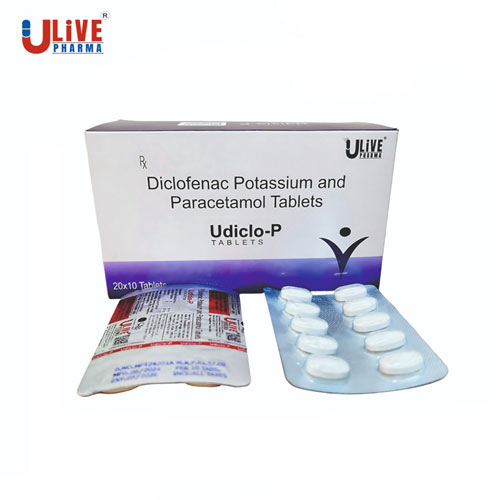
Diclofenac 50mg + Paracetamol 325mg Tablets
UDICLO-P Tablets

Diclofenac 50mg + Paracetamol 325mg Tablets
10X10
BLISTER
Diclofenac and paracetamol are used to help reduce pain. It helps reduce pain from things like headaches, mild migraines, muscle aches, toothaches, rheumatoid arthritis, ankylosing spondylitis, osteoarthritis, or painful periods.
Diclofenac is a type of medicine that comes from phenylacetic acid and is part of a group called NSAIDs (non-steroidal anti-inflammatory drugs). It is a popular medicine used to treat pain and swelling from rheumatoid arthritis, osteoarthritis, and ankylosing spondylitis.
Paracetamol (also called acetaminophen) is a medicine that helps reduce pain and lower fever. It is the most widely used pain relief medicine in the world. The World Health Organization (WHO) suggests using paracetamol as the first choice for treating mild to moderate pain.
How it works:
Diclofenac: It is a pain reliever that also reduces swelling and inflammation. It mainly works by blocking enzymes called Cyclooxygenase (COX-1 and COX-2) that help make prostaglandins. Prostaglandins are chemicals that cause pain, swelling, and fever in the body.
Paracetamol: It is a type of medicine that helps reduce pain and lower fever. It helps reduce pain by stopping chemicals in the brain that cause it and lowers fever by affecting a part of the brain that controls body temperature.
Administration Of Dosage
- Take this medicine exactly how your doctor told you to, in the amount and for the time they said.
- Swallow it whole with water; don’t crush, break, or chew it.
- A doctor should decide the right amount of medicine based on the person’s medical condition and what they need.
- Taking diclofenac with food might make it less effective than taking it on an empty stomach.
- Keep the medicine as instructed on the package, usually at room temperature and out of light and moisture.
Benefits
Diclofenac 50mg + Paracetamol 325mg has two ingredients: Diclofenac, which helps relieve pain, and Paracetamol, which lowers fever and also helps with mild pain. It works well for muscle pain, joint pain, and muscle cramps.
- Diclofenac helps by stopping a chemical called cyclooxygenase (COX) from working. This chemical is responsible for causing pain and swelling in injured or hurt areas of the body.
- On the other hand, paracetamol helps reduce pain a little and lowers fever, making Diclofenac work better for pain relief. It also helps ease tooth pain, ear pain, back pain, and other pain related to muscles and bones.
Side Effects
- Nausea
- Vomiting
- Liver dysfunction
- Dizziness
- Light-headedness
- Malaise (feeling of discomfort)
Precautions
- Don’t use the Diclofenac 50mg + Paracetamol 325mg Tablets if you are allergic to Diclofenac or Paracetamol.
- If you have heart problems, liver or kidney issues, or are addicted to drugs or alcohol, talk to your doctor before using this Tablet.
- If you are allergic to any medicine or food, talk to your doctor before using this medicine.
- Take this medicine while your doctor is watching over you.
- To prevent any problems, talk to your doctor if you are taking other medications.
- Please let your doctor know if you have taken or are taking any of the medicines listed below:
- Do not take the medicine with alcohol or when you are drunk, as they can interact and cause problems like feeling sick, dizzy, and having bad stomach issues.
- You should not take this medicine if you have asthma that gets worse with NSAIDs, swelling, stomach problems, skin rash, kidney issues, or a history of heart attack.
- You should eat enough food when taking this medicine because it helps your body use the medicine better.
Frequently Asked Questions (FAQs)
What is the primary use of Diclofenac 50mg + Paracetamol 325mg tablets?
This combination is used for the short-term relief of moderate to severe pain and inflammation. It is highly effective for musculoskeletal pain, arthritis (osteoarthritis/rheumatoid), dental pain, post-surgical recovery, and severe headaches. While Diclofenac reduces swelling and inflammation at the site, Paracetamol raises the body’s overall pain threshold for faster relief.
Why is this combination more effective than taking the medicines separately?
The two drugs work through different mechanisms: Diclofenac inhibits the production of prostaglandins (chemicals causing pain/swelling) at the injury site, while Paracetamol primarily acts on the central nervous system to block pain signals and reduce fever. This synergistic effect provides “double-action” relief with a lower risk of side effects than taking a high dose of a single drug.
What is the most important precaution when taking this medicine?
The most critical rule is to always take the tablet after a meal or with milk. Both Diclofenac and Paracetamol can irritate the stomach lining; taking them on an empty stomach significantly increases the risk of acidity, heartburn, and, in long-term cases, gastric ulcers or bleeding.
Can I take this tablet if I have a history of asthma or heart issues?
You should exercise extreme caution. Diclofenac, like other NSAIDs, can trigger “Aspirin-sensitive asthma” or cause bronchospasms in some individuals. Additionally, prolonged use is associated with an increased risk of cardiovascular events (heart attack or stroke), so it is generally avoided in patients with pre-existing heart, liver, or kidney diseases.
Are there any restrictions on alcohol or other medications?
Yes, you must avoid alcohol while on this medication as it significantly increases the risk of liver damage (due to Paracetamol) and stomach bleeding (due to Diclofenac). You should also avoid taking other “over-the-counter” cold or flu medicines, as they often contain hidden Paracetamol, which could lead to a dangerous overdose.